Before setting off in a dinghy or motor boat around the Island of Elba, it is important to be familiar with the local regulations and basic boating safety rules. The guidelines below are based on the regulations issued by the Portoferraio Harbour Master’s Office, which apply along the island’s coastline and throughout the Tuscan Archipelago.
Portoferraio Harbour Master's Office regulations — the main rules
First and foremost, always check your fuel level before departure. Boats are delivered with a full tank, and there are no fuel stations at sea. Return before your fuel level drops below one-third of the tank.
First rule above all: always check your fuel level before departure.
Minimum distances from the coast and beaches
Stay at least 200 metres from beaches and 100 metres from rocky shores between 8:00 am and 8:00 pm.
Keep at least 100 metres away from divers’ marker buoys.
Speed limits close to the shore
You may cross the waters in front of steep rocky coastlines only to land, moor or anchor, and at a maximum speed of 3 knots.
Rules for jet skis and personal watercraft
Navigation is permitted only during daylight hours and within one nautical mile of the coast.
Minimum distance from the shore: 400 metres in summer, 300 metres during the rest of the year.
Maximum speed close to the shore: 3 knots.
An approved personal flotation device (life jacket) is mandatory for every rider on board.
Anchoring the vessel
To anchor a vessel safely it is necessary, after the anchor has been dropped and reached the seabed, to leave a length of rope slack, equal to three times the length of the rope used to reach the seabed.
Another thing to pay attention to, when lowering the anchor into the sea, is to keep the line secure, to avoid losing the anchor itself.
Mobile phones on board
If you have a mobile phone, bring it with you; there are watertight spaces on board where you can keep it dry. If necessary, our office is just a phone call away at 347 6870275 – 340 3531059. Our staff will provide you with all the information and assistance you need to deal with the emergency.
For general emergencies at sea, you can always call 1530, the Italian Coast Guard emergency number.
Landing on an equipped beach
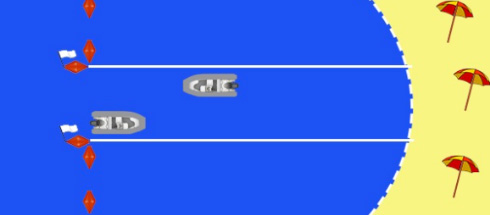
The equipped beaches are equipped with landing corridors. To disembark, you must enter between the two red buoys with white flags and travel along the corridor keeping to the right, both when entering and leaving. Sail at a reduced speed below 3 knots. Anchoring is permitted outside the red biconical buoys.
Landing on an unequipped beach
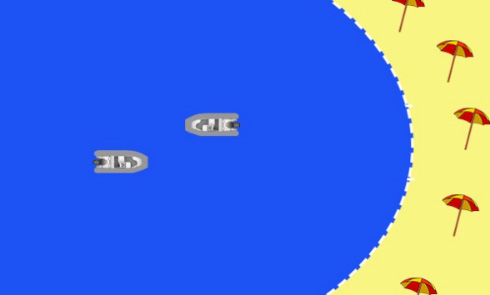
On unequipped or natural and wild beaches, there is no landing corridor. To get ashore you need to: 1) Turn off the engine and raise the foot of the outboard motor 100 metres from the shore; 2) Continue your approach using the oars. If you want to park on the beach, the boat must be anchored 100 metres from the shore.
Crossing with diver
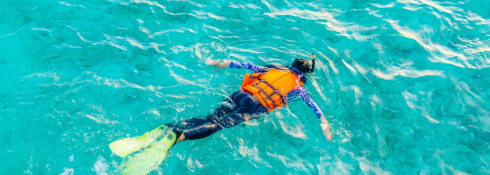
When you encounter a diving signal, with a red flag and a white diagonal on a buoy or the same flag displayed on a vessel, you must keep a minimum distance of 100 metres. In this specific case you need to reduce your speed.
Signal buoys
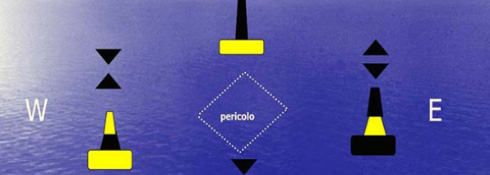
For all signals at sea (buoys) which are placed to indicate dangers (shallow waters, rocks, and other) you must pass the signal, facing towards the open sea, at a distance of no less than 100 metres. It is absolutely forbidden to pass between the signal and the coast.
Safety equipment by engine category
For vessels with engines up to 40 HP, the equipment covers sailing less than 1 nautical mile (1,850 metres) from the coast: going beyond this point is not permitted. For vessels with engines greater than 40 HP, the on-board equipment is for navigation less than three nautical miles (5,550 metres) from the coast: a greater distance is not permitted.